Last Thanksgiving I quickly made a carrot wine from the leftover water used to boil carrots for our Carrot Casserole. Vegetable wines are a mystery to me and I wanted to try making something different. I realized that wine could be made from this liquid having made parsnip wine in the same manner and thank goodness I did.
Last night I opened a bottle of my carrot wine and had a sample or two or three. It was delicious! I guess I don't have a good taste memory, because at the time of bottling, I'm sure I sampled some. It's a white wine, light, lemon color and very clear. The taste is similar to a Chardonnay, not at all like carrots, with good structure too. A bit on the sweet side, but not overly so.
I usually don't equate country wines with grape wines like Chardonnay. They are totally different beasts. Wine grapes contain all the necessary ingredients needed to make wine. The perfect package, each grape contains juice, acid, yeast and sugar. Carrots do contain sugar, but lack the other necessary components.
I'm going to make this one again and urge you to do so if you have the chance. I only made a gallon, (5 bottles) and I am sure to share some with friends. Carrots are sweet and savory and I think this wine has a good bit of both. Cheers.
I'll be sure to post the recipe so you can make some too.

Thursday, July 28, 2016

Saturday, June 18, 2016
Amylase
Having made wine for at least the last 12 years, I was surprised when I needed to purchase a new ingredient. My latest wine, a barley wine, called for the use of Amylase. I didn't know what it did exactly and had to look it up.
Amylase is used in the making of bread, cattle feed and laundry detergent. It's primary function is to break down starches into short chain sugars. There are different kinds of Amylase and they come from a variety of sources. One such variety, Alpha Amylase found in human saliva, called Ptyalin, is comprised of 511 amino acids and is secreted by the salivary glands during eating.
Another type of amylase, Beta Amylase is found in plants, mold, yeasts and bacteria. Beta Amylase is a primary component of Diastase which convert the starches of grains into sugars. Home brewers rely on this type of conversion in the mashing process to aid in sugar extraction.
Ancient cultures have used saliva to create fermented beverages for hundreds of years. In the Peruvian rain forest, locals make Mosato by chewing the root of the Yuca, fermenting the masticated juice into a refreshing alcoholic drink. Another drink called Chicha, is made by chewing corn.
So the use of Amylase in brewing goes back to ancient times. The discovery that saliva converts starches to sugars is a ingenious low-tech solution to making home made beverages from grains. Those same principles are used today in everyday products. Sure we could use saliva, but now we have other, more palatable ways of achieving the same results.
Another type of amylase, Beta Amylase is found in plants, mold, yeasts and bacteria. Beta Amylase is a primary component of Diastase which convert the starches of grains into sugars. Home brewers rely on this type of conversion in the mashing process to aid in sugar extraction.
Ancient cultures have used saliva to create fermented beverages for hundreds of years. In the Peruvian rain forest, locals make Mosato by chewing the root of the Yuca, fermenting the masticated juice into a refreshing alcoholic drink. Another drink called Chicha, is made by chewing corn.
So the use of Amylase in brewing goes back to ancient times. The discovery that saliva converts starches to sugars is a ingenious low-tech solution to making home made beverages from grains. Those same principles are used today in everyday products. Sure we could use saliva, but now we have other, more palatable ways of achieving the same results.
Monday, May 23, 2016
Bigs Barley Wine Recipe
Bigs Barley Wine Recipe
Makes one gallon,
1 lb. Whole or Cracked Barley
1 lb. Golden Raisins
2-1/2 lb. Sugar
Zest and juice of 2 Lemons, OR 4 tsp. acid blend
Zest and juice of 2-3 Oranges (optional)
1/2 tsp. Tannin
1 Campden tablet, Crushed
Amylase, to help convert starches to sugar (prevent starch haze)
Montrachet Yeast
Toast the barley (optional) on a cookie sheet in a 375-400 degree oven for about ten minutes. Stir the grain every few minutes. Cool. Put the barley in a large stainless steel pot, cover with water and soak overnight. Do the same with the raisins.
The next day, place the barley and raisins in a food processor, pulse till well chopped. Put the barley and raisins in a grain bag and place into the primary fermenter. Then add the sugar and pour over hot (not necessarily boiling) water.
Add the juice of the lemons or citric acid. Also add the juice of the oranges (if using them). When cool, add the tannin, yeast nutrient, Amylase and crushed Campden tablet. Cover and leave for 24 hours, then add the yeast. Cover closely and leave for 8 days, stirring daily, then strain into a fermentation vessel with airlock. Siphon off into bottles when clear adding 1-crushed Campden tablet beforehand. Ready to drink in about six months.
Thursday, May 5, 2016
Bigs Barley Wine
Whisky is all the rage right now and I thought it only appropriate to feature a grain in my next wine. More specifically, Barley. If I could only age the wine in used Whiskey Barrels we would really have something, that is if you like whiskey. I've never made Barley wine, so I thought it only fitting to make a straight recipe and see what it's like before adding unnecessary flavorings.
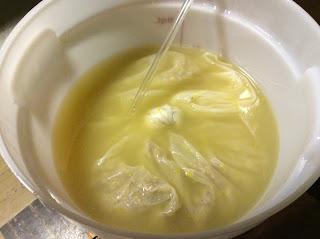

It's a fairly straight forward wine to make. No fussing with fruit. Just soak the grains, chop them with raisins and add to a grain bag. Put the lot into a fermentation bucket and add the rest of the ingredients. The only special ingredient you need is Amylase, which helps prevent a starch haze and helps break down the sugars in the grains. If you are interested in the recipe I'll post it here soon.
If you are interested in the recipe, you'll find it here.
If you are interested in the recipe, you'll find it here.
Monday, April 25, 2016
Dandelion Wine Recipe
Many people would be embarrassed to say they have a great crop of spring dandelions. I was thrilled. Having missed out on the harvest last year, I was anxious to get to picking. I waited til afternoon so the flowers were in full bloom and picked quite a bit more than needed with more to spare. My front and back yard had more flowers than anticipated. I thought I would have to go about the neighborhood to pick my quota, but the backyard was plenty sufficient.
 |
| The dandelions are picked and ready to brew. |
Dandelion Wine Recipe
Makes 2 Gallons
April 24, 2016
8-quarts dandelions
2-lemons
3-cups fresh squeezed orange juice
12-ounces Black Raisins
4-pounds sugar
1-can frozen apple juice concentrate
2-gallons water
2-teaspoons yeast nutrient
1/4 teaspoon tannin
2-campden tablets
1-packet yeast
I placed the flowers in a large stock pot and picked through them making sure all the stems and bugs were removed. I set another pot on the stove with three quarts of water to boil. When the water was boiling, I poured it over my flowers and let it simmer briefly, covered and let them steep with the burner off. Next, I added two more quarts of water to the stock pot and four pounds of sugar and let it come to a simmer for about ten minutes. Let cool. When cool add the flower water and sugar water to primary fermentation bucket. Add 12 ounces of black raisins that have been soaked and chopped to a fermentation bag in the primary as well. Also add the juice of two lemons, one can frozen Apple juice concentrate and 16 ounces fresh squeezed Orange Juice. Add grape tannin, yeast nutrient and two campden tablets. 24 hours later take a specific gravity reading and add the yeast.
Rack after 4-5 days to a glass carboy fitted with a airlock. Rack again after a month. Bottle when clear.
Nanking Cherry Wine Recipe
Nanking Cherry Wine Recipe
 |
| The frozen cherries patiently waiting in the main fermenter |
Brewing date: August 24th, 2015, 12:41 pm
Makes 2-gallons
RECIPE
7.5 lbs ripe Nanking cherries ( both white and red cherries)
4 lbs granulated sugar
2 11-oz cans Old Orchard frozen grape (Concord) concentrate
Enough water for two gallons must
1 crushed Campden tablet
1/4 tsp grape tannin
1 tsp pectic enzyme
1 tsp acid blend
1 tsp yeast nutrient
LALVIN EC-118 wine yeast
Add half the water and sugar to a large stock pot and bring to a boil. Simmer the water and sugar for ten minutes. To a large fermentation bucket, add the frozen cherries. Pour the boiling water over the cherries and mash with a potato masher to release the color. Add the cans of frozen grape concentrate and top up with cool water to make 2-gallons of must. When completely cool, add the tannin, yeast nutrient, acid blend and 2-crushed campden tablets and mix well. Wait 24 hours and add the pectic enzyme. Add the yeast 12 hours after the pectic enzyme.
NOTES:
I added the pectic enzyme at approximately 10 am on Tuesday morning. Will need to add yeast wednesday morning a the same time.
August 26th, 9a.m. Pitched yeast
Starting Gravity: 1.098, Approx. 13% Alcohol
September 1, 8 p.m. First racking
September 13, 2nd racking. Topped with spare must from fridge.
November 18, 2015: wine is clarifying.
December 16, 2015: Racked wine and added American Oak chips. The flavor is very tart, with a rich amber color. This should sit about a month at least on the oak chips.
March 20, 2016: My 3-gallon carboy has been sitting in the basement for three solid months with the oak chips added. I usually rack off the oak chips earlier, but sometimes it's good to see how the flavor changes over time. Today I finally stabilized the wine and bottled it. I added Potassium Sorbate, 1 ounce glycerine and 1 ounce of sugar syrup to the racked wine, mixed well and bottled.
Thursday, April 7, 2016
Sugared Plum Wine Recipe 2015
Plum wine #2 2015
Just having made plum wine a few days ago I didn't expect to be thinking about making this wine again so soon. I found plums on sale at Aldi and couldn't pass them up. They were selling Sugared Plums which I had never seen before. So I snatched them up along with a can of frozen apple juice.

Sugared Plum Wine 2015
Brewing day: June 20, 2015, 10 a.m.
4 lbs. Sugared Plums
1 can frozen apple juice
2 lbs. Sugar
Acid
Tannin
Yeast nutrient
Pectic enzyme
Wine yeast
Notes:
Pitched yeast on Sunday morning June 21 at 10 am.
Specific gravity: 1.122, a bit high but not a full gallon of liquid so a bit off. I will top up to a gallon when racking.
June 29, 1st racking
July 19, 2nd racking, Gravity 0.993, beautiful ruby color.
No noticeable fermentation.
August 29, wine is clearing nicely and is a much richer color than plum wine number one.
September 13, removed wine from cold storage. Carboy has been in the garage fridge for two weeks to clarify and stabilize.
November 27, 2015: Bottled wine. Added stabilizer and three ounces of sugar syrup
Subscribe to:
Posts (Atom)